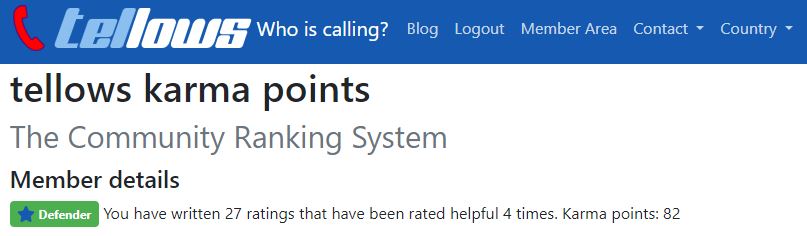
For some time now, there has been a ranking system for the tellows community – the tellows karma points. In order to honour the dedicated educational work of our members and to make the interactions in the community even more transparent, you can now fight your way from level to level. The high score list in the members’ area shows both your score and your ranking in the community. The patch next to your username defines your level and shows the community how many karma points you have already collected.
Overview of the new levels
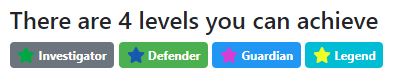
In order to publicly display the commitment in the community, each user is given a patch. In doing so, you can reach a total of four different levels depending on your score. You reach the level “Investigator” if you participate in the investigative work of the community. Via the “Defender” level, which you reach when you have collected 50 points, you can fight your way up to the “Protector” level (100 points or more). With a legendary karma value of 500 points, the “Legend” rank is rightly awarded for unparalleled community involvement.
Join tellows now and receive benefits
As a member, you automatically earn Karma points. As soon as you are logged in, you have access to a personalized infographic in the member area that reveals exciting facts about your activity in the community and shows to what extent your ratings are helpful for the general public. Depending on the level you reach, exciting rewards will be unlocked. For example, voucher codes for our FRITZ!Box Caller Protection are available for family and friends when you reach the higher levels. In addition, comments from “protectors” and “legends” are automatically rated as positive. As a registered tellows user you additionally benefit from the protection against deletion of your comments. Your comments cannot be deleted without a detailed review by the tellows team. Furthermore, members can create their own personal blacklist in addition to the community blacklist. You can find more info at member area. If you are not a tellows member yet, you can join
here.
This is how the karma points system works
The tellows Karma Points are an exclusive ranking system for tellows members. As a logged in member, the point collection starts automatically. For each rating you get one point. The more detailed the ratings in the community are, the better the protection against spam calls. Therefore, providing the caller’s name as well as a comment on the rating earns bonus point each time. Reviews of other reviews are also rewarded. If your comments are marked as helpful, your karma account increases.
You can find an overview of the scoring system by clicking on one of the patches. The more points you collect, the faster your level in the tellows community increases. Collect Karma points now and contribute to the protection of the community with your commitment.
In this blog post tellows interviews an artificial intelligence (AI). Tellows has been dealing with the issue of phone rip-offs and scam calls for over 10 years. Therefore, we want to assess how well the AI ChatGPT knows about this topic. We put the AI’s knowledge to the test and rated its answers . At the end of the interview, we evaluate the AI’s answers from an expert’s point of view. We looked at various aspects of call protection, from the latest scams to the best ways to protect yourself from unwanted calls. Find out how effective AI is in protecting us from phone scams and whether it can help protect us from unwanted calls.
AI in action: The interview
Hello AI, are you ready for an interview?
Yes, I am ready for an interview. What do you want to know?
I want to talk to you about scam calls.
Sure, what specifically do you want to know about phone scams?
Is there a problem with phone scams and fake calls in the UK?
There is indeed a problem with telephone scams and fake calls in the UK. This type of fraud can come in different forms, such as fake phone numbers used by fraudsters to deceive potential victims or fraudulent calls where the fraudsters try to get personal information or money from the victims. There are also many fraudulent calls that impersonate government agency or company employees to gain the trust of victims. There are several steps one can take to protect themselves from phone scams, such as blocking suspicious numbers, being careful when sharing personal information over the phone and ignoring calls from unknown numbers. It is also important to educate yourself about the different types of phone scams so that you can recognise when you may be a victim of a scam.
We see the well-known “grandchild trick” as one of the most dangerous scams, do you agree?
The grandchild trick is actually a very dangerous and widespread fraud method. In the grandchild trick, the perpetrators pretend to be relatives or friends of the victim and ask for money or personal information. Often the perpetrators pretend to be grandchildren who are in an emergency situation and urgently need money. Many people are particularly susceptible to this type of scam because they are concerned about their relatives and want to help. It is important to always be careful and never give money or personal information to strangers, especially if they are posing as relatives.c
What other telephone scams do you know about?
Some other common phone scams are:
“Winning Scam”: Perpetrators pretend that the victim has won a prize and ask for personal information or a fee in order to receive the prize.
“Imposter Scam”: Perpetrators impersonate officials of government agencies, banks or other institutions and ask for personal information or money.
“Phishing”: Perpetrators send emails or text messages with fake links asking the victim to go to a fake website to enter personal information.
“Robocalls”: automated calls that advertise or make fake offers.
It is important to always be suspicious and never give personal information or money to strangers, especially if you are unsure. If in doubt, you can contact the police or the institution in question to verify your identity.
What tips do you have to protect yourself from phone scams?
Here are some tips on how to protect yourself from phone scams: Be suspicious of calls from unknown numbers or calls where the number is withheld. Simply hang up if you are unsure. Never give out personal information such as account information, social security numbers or passwords over the phone unless you have verified the person calling and are sure they are a trustworthy person. Be wary if you are told over the phone that you have won something or that you have been selected to participate in a survey. Such offers are often scams. Ignore calls that ask you to press a certain button or leave a message to remove yourself from the caller list. Install an app that blocks unwanted calls or use your phone’s features to block unwanted calls. Report suspicious calls to the police or telecommunications regulator. Learn about the different types of phone scams and how to recognize them. Be especially careful if you are asked to transfer money to a bank account or by wire transfer, as this is a common way for scammers to get victims’ money.
I fully agree with you on many points. However, I am very interested in one point. You talk about apps against scame calls: What do you think about automatic call protection?
Automatic call protection can be a useful tool to protect against phone scams. This type of protection can automatically block unwanted calls or forward them to voicemail before they reach the user’s phone. Some of these applications use artificial intelligence (AI) and machine learning to detect and block calls from known scammers and unwanted callers. Others use databases of known fraudulent numbers and block them directly. There are also applications created by various organizations and regulators based on reports from consumers to detect and block unwanted calls. However, it is important to note that automatic call blocking is not 100% reliable and it is still possible for fraudulent calls to get through. Therefore, it is important to remain cautious and educate yourself about the different types of phone scams in order to quickly recognize when you might be a victim of a scam.
Do you know the call protection of tellows?
Yes, I am familiar with tellows call protection. Tellows is a free phone number information system that allows users to look up phone numbers and read reviews from other users to find out whether a number is trustworthy or not. Tellows also offers a call blocking service that allows you to automatically block unwanted calls. This service uses Tellows’ database to block calls from known spam numbers. Users can also manually blacklist numbers and have them blocked automatically. Tellows is a popular choice for people looking for a way to protect themselves from unwanted calls, and it is a good addition to the options already mentioned. However, it is important to note that there is no 100% security here either, and it is always good to be cautious when receiving calls from unknown numbers.
The tellows team is a professional in the field of call protection. Can tellows protect against telephone fraud?
Tellows is a useful tool that can help users protect themselves from unwanted calls and phone scams by allowing them to look up phone numbers and read reviews from other users to find out whether a number is trustworthy or not. Tellows’ call blocking service uses Tellows’ database to block calls from known spam numbers, and also allows users to manually blacklist numbers and block them automatically. However, it is important to note that no method, including Tellows, can provide 100% protection against phone scams. Scammers change their methods and numbers often, so it is important to continue to be cautious when receiving calls from unknown numbers and always be aware of the latest scams. It is also important to never give out personal information or money to anyone without being sure that the person is trustworthy.
What role does the tellows community play in scam detection?
The tellows community has an important role in fraud detection as it allows users to look up phone numbers and read reviews from other users to find out whether a number is trustworthy or not. By allowing users to rate numbers and share information about unwanted calls and phone fraud, the tellows community helps keep the tellows database up to date and protect other users from fraud. These ratings and information can contribute to a number being blacklisted and thus automatically blocked. However, it is important to note that the tellows community is only a supplement to other protective measures and is not a substitute for caution and common sense. It is always advisable to inform yourself about current scams and methods in order to protect yourself and your data as best as possible.
We see it as our task to educate about telephone fraud. Which topics in the area of telephone fraud need to be educated about more?
Some of the phone scam issues that should be more educated about include:
1. “Fishing” or voice phishing: This involves scammers calling and posing as representatives of banks, government agencies or other reputable organizations in order to obtain personal information or money.
2. “Impersonation Scam”: where scammers pretend to be friends, relatives, or even police officers in order to obtain money or personal information.
3. Tech Support Scam: Here, scammers call pretending to be employees of technology companies and offer help with technical problems. They then ask for access to the victim’s computer or personal information.
What is the most important message to the public to protect against telephone fraud? Formulated in one sentence
The most important message to the public to protect against phone scams is to always be suspicious of calls from unknown numbers and never give personal information or money to anyone without being sure the person is trustworthy.
Thank you for the interesting interview on the subject of telephone fraud and how to protect yourself from it.
You are welcome, it is important to educate about this issue. I am here to help you answer more questions.
The evaluation – expert opinion on the interview
Conversation Impression::
The interview with the AI ChatGPT was very exciting and impressive. The AI was able to positively surprise on many points. It should be noted that precise and detailed answers are written in a matter of seconds. In terms of content, the partly detailed answers of the AI were completely convincing. Rating: 4 out of 5 stars
Service:
The AI “ChatGPT” is very easy to use. After a free and uncomplicated login, a chat with the AI can already be started. In the input bar, questions or orders can be written, which are then answered by the AI within seconds. Due to the extreme popularity and corresponding load of the service, there are sometimes delays in the login process and in the response time of the artificial intelligence. Rating: 3.5 out of 5 stars
Response quality:
Positive:
+ The AI knows a wide variety of fraud schemes and can differentiate and explain them according to importance. In addition, the AI shows suitable protection options and behavioral tips for different types of fraud, which we as the tellows expert team agree with..
+ Explicitly asked about the “grandchild trick”, the AI knows how to shine with background knowledge.
+ The AI’s answers all seem very authentic and follow a sensible structure.
Inaccuracies:
Despite the consistently good feedback, we have been able to identify some inaccuracies.
– When asked for tips on how to protect against telephone fraud, the AI explains various options, but does not mention the use of an online community (e.g. tellows). In our opinion, online communities are an important building block for protecting against and resolving telephone fraud. Rating: 4 out of 5 stars
– Surprisingly well, the AI was able to explain what tellows is and what tellows does. Here, however, we would have hoped for an explanation of our call protection solutions as well as a link to the question “How to protect yourself from telephone fraud”.
In summary, the AI is able to deal with technical issues extremely confidently and is convincing across the board despite a few minor inaccuracies. Overall rating: 4 out of 5 stars
(tellows generated this text in part with GPT-3, OpenAI’s large-scale language-generation model. Upon generating draft language, tellows reviewed the language to their own liking and takes ultimate responsibility for the content of this publication.)
Telephone scams and dubious calls are and will remain an issue that will not lose its relevance anytime soon. Quite the contrary. Every day, individuals continue to be confronted with the fraudulent stories of unscrupulous scammers.
The reasons given for the calls cover a wide range: from the delivery of shocking news to the announcement of an alleged profit. Often it is not easy to see through the scam, let alone keep track of it. For this reason, tellows has made it a business to always inform and warn you about the latest unwanted, dubious phone numbers.
Attention! Be skeptical with these callers
The listed call numbers were searched for particular frequency by tellows users in June 2022 and accordingly often rated negatively. The comments show that the scammers have a very strong Indian accent and are claiming to be working for O2 company. Be careful, official numbers are often targeted by scammers who manipulate phone numbers via spoofing, and their main goal, in this case, according to the comments is always to either get your personal data or your money directly with the “excuse” of the need to renovate the contract. What is particularly striking about June’s unwanted numbers is that virtually all of them started their activity of contacting people this month, for this reason, it is important to stay informed about the latest dubious numbers.
Stay safe from spam calls! Thanks to tellows APP, you can find out who’s calling you right away, rate numbers and block calls . Benefit from free Caller ID search, unknown number information, spam call blocker, personal blacklist and more!
It’s a new week, but the spammers take no break. We collected the current top spam numbers from tellows-au.com and tell you what they are about. This week we share phone numbers with you that sent text spam messages all over Australia.
tellows’ Top 5 Text Spam Numbers of the Week
1. 0422859388 by provider Optus with a tellows Score of 7
2. 0427006689 by provider Telstra – with a tellows Score of 8
3. 0421374155 by provider Optus – with a tellows Score of 7
4. 0429478744 by provider Telstra – with a tellows Score of 8
5. 0438273649 by provider Telstra – with a tellows Score of 8 Continue reading →
Whenever someone receives a call from a strange number, we get quite uncomfortable. It could be a legitimate call from our insurance company or an acquaintance. But what if it is a scammer? How can we be sure about the caller? Don’t worry, tellows is here to help you. You can check an unknown number on tellows-au.com to see who called and why. This week we inform you about the latest fraud numbers that have been recently reported all over Australia.
tellows’ Top 5 Spam Numbers of the Week
1. 0370679621 from Melbourne with a tellows Score of 8
2. 0861462979 from Perth – with a tellows Score of 8
3. 0423556255 from Optus – with a tellows Score of 8 (Courier Scam via SMS)
4. 0390875570 from Melbourne – with a tellows Score of 8
5. 0386389099 from Melbourne – with a tellows Score of 8 Continue reading →
We’ve all seen spam and fraud in our everyday life. Luckily, it is often easy to see through them before it is too late. But especially on the phone, it can be tricky to distinguish a genuine call from a scam call. On tellows-au.com we receive reports about scam callers everyday. The users may ask themselves, why is the person calling me? The caller already knows my name and address, so it has to be trustworthy, right? – No way! We tell you what common frauds look like and how you can protect yourself from them.
Scam Losses Rise
In 2021 Scamwatch reported, that losses exceeded $211 million in the phone scam area between January and September. This numbers is even higher than it was for the whole year 2020. In 2021 Scamwatch received over 113,000 reports about phone scams.
Less people reported losing money in 2021. On the other hand, those people who lost money, have lost larger amounts with an average loss of $11,000.
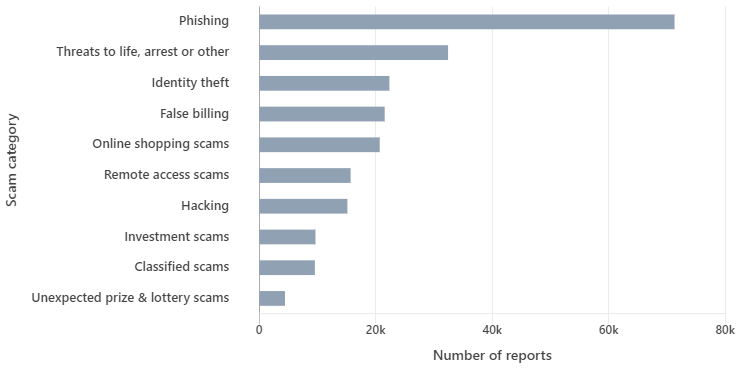
Scamwatch published the top 10 scam methods of 2021. Phishing is the most reported scam showing how dangerous this scam has become and that exercising precaution with sharing data is the number one priority.
Common Types of Scams
Scammers like to tell stories and make you believe that the call is urgent by putting pressure on you. For example there is a time senstitive event with only limited offers left or your safety is at risk when you don’t allow access to your computer or pay a debt immediately. Sometimes they pretend to be from well-known company or your insurance. Maybe you also receive a text message or a silent call where you have no chance to even answer the phone. These are just some tricks Australian scammers use to make you call back and share sensitive data.
It’s very concerning to see these scams evolving and becoming more sophisticated to steal even more money from unsuspecting people. – ACCC Deputy Chair Delia Rickard
Despite the Corona Virus the European Cyber Security Month (ECSM) takes place once again all over Europe. Because of the pandemic our everyday life changed and nowadays almost everything takes place online which makes it even more important to know how to protect your data and how cyber scammer work.
Also, our way of working changed. Now we work and learn at home and all professional and personal contacts, like keeping in touch with beloved ones, are conducted online. All these actions increase the general internet activity and that attracts cyber scammers. At the beginning of the pandemic there were fewer calls than in the past years at the same time. But the calls of scammers didn’t decrease. You might ask yourself how do you protect your data. That’s what the cybersecurity Month is about.
What is the EuropeanCyber Security Month?
The first European Cyber Security Month took place in 2012 and it’s organized by the European Union Agency for Cyber Security (ENISA) and the European Union Member States. The over-all topic every October is the cybersecurity. The aim of the ECSM is to create awareness of cyber criminality and to show the right way to move around on the internet. Like every year all citizen and companies can take part.
Think Before U Click #ThinkB4Click
The main topic of the ECSM since the beginning is that cybersecurity is a shared responsibility and all European countries should work together against it. Additionally, every year the ECSM has a motto. This year’s motto is #ThinkB4UClick and all activities and workshop concentrate on the approach to identify cyber scammers and the general danger of cyber criminality. The first two weeks are about digital skills and week three and four concentrates on cyber scam.
tellows and the Cyber Security Month
Scammers try to take advantage of the current situation and use it to make profit. Especially they are after E-commerce companies and online pay-systems. That shows that data protection is now even more important than before the pandemic.
We report about the Cyber Security Month because it’s important to know about cyber scammers and their methods. Spam calls can happen to everyone. tellows can help to identify those calls and help you with the decision if you should answer the phone or not.
An annual moth about cybersecurity is important, but we from tellows think it’s even more important to be aware of new scam methods and threats of the internet all the time. Although, we aren’t taking part in the ECSM, we are protecting you and your data every day! It’s essential to improve your own behaviour on the internet and on the phone, but also to update your friends and family regular about new scam methods and security gapes. On your website you can check dubious numbers at all time and your community reports new numbers on our website every day!
What are you doing to protect yourself from cyber criminality? What experience did you make? Share your knowledge in the comments and help others to protect themselves.
We have been living with the restrictions that the Covid19 virus brings with it for six months. The time cuts are different in many countries and regions. The economy around the world is severely affected by the effects and regulations of the government. But how has calling behavior changed during the pandemic?
Fewer calls in lockdown
Almost every company needs the telephone in everyday life, regardless of whether it is for daily customer support, consultation or appointment arrangements, or sales and acquisition. Due to the restrictions in daily work and the increase in home office activities, the number of calls has changed in many places. Many companies have not only moved their work home, but have been forced to severely restrict business lines.
This is reflected in calling behavior, which has changed significantly during the pandemic and especially during the strict lockdown. External telephony was greatly reduced, not only because other companies were less accessible and technically poorly equipped at home, the economic situation also meant that appointments, support or expenses through sales and collaborations were not made or were limited until further notice. This also applies to call centers and companies that use phone calls for undesirable purposes such as telephone spam, advertising or even fraud.
tellows shows the history of caller activity in different countries
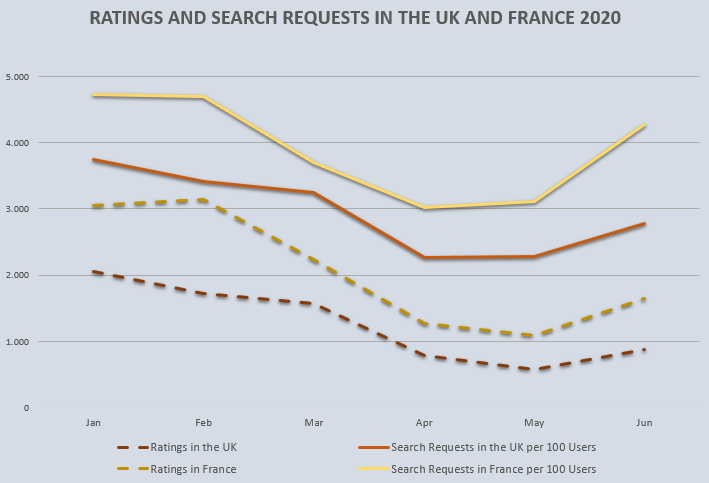
Even on tellows we experienced fewer reported calls and fewer numbers were searched, which is noticeable in the low number of calls made in general.
In the following diagram, we show you the caller behavior over time in the UK and France.
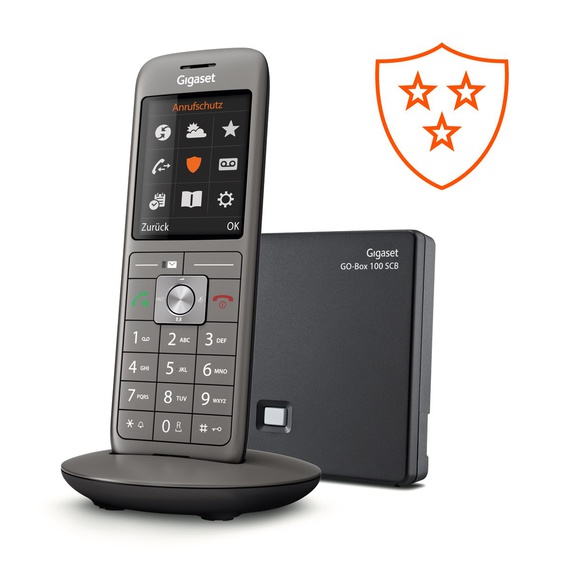
We have great news for all landline phone owners affected by phone spam. We are pleased to announce that we have developed a new product together with Gigaset Communications AG that offers every home a secure telephone experience: The Gigaset CL690A SCB telephone with tellows call protection.
The Gigaset CL690A SCB offers the latest developments that a landline phone can have. In addition to making calls and sending messages, the phone features a modern colour OLED display, an intuitive navigation menu, three integrated answering machines, date and time information, news, weather updates and the QuickSync contact management option. What makes the phone unique is the integrated tellows call protection. Each phone includes caller identification and call blocking software. Activation is required only once. The phone then receives daily updates with currently reported spam numbers and offers protection against unwanted callers.
Aggressive advertising, annoying opinion polls or ping calls are a thing of the past. The database is constantly expanding thanks to the tellows community that reports phone numbers on tellows. This means that users always receive up-to-date information through an intelligent cloud-based service. With the Gigaset CL690A SCB, users specify which protection they want to activate in their phone settings. Caller identification, blocking or mute of unwanted calls is possible. In the case of incoming calls, the user is shown the caller’s category and the tellows score, which are quickly easy to understand in the respective signal colours and reflect gravity (white – unknown, green – safe, yellow – neutral, red – dangerous). This way users can quickly decide whether or not to answer the call. Continue reading →
Superficial knowledge can be dangerous, we all know that. In terms of telephone advertising and fraud, it can cost you a lot of money and nerves! Therefore, today we present you the most common myths regarding telephone advertising, telephone fraud and possible manipulations on tellows and clearify them.
1. Telephone scam only affects older people
As soon as one hears of telephone scam, one has more in mind the 93-year-old Mary-Ann, who was tricked by fraudsters, than the 26-year-old computer science student Stella. The fact is: Fraudsters often try to scam older target groups since they tend to be less careful and easier to be fooled. They are not always informed about the latest phone scam tricks, so a call from an alleged family member or the bank employee can turn into a costly trap.
However, this does not mean that everyone else can think themselves safe. Since there are many types of fraud, the victims differ. There are even tricks that mainly lead to success for the fraudsters among younger people. Such an example would be the Microsoft support scam, which targets access to sensitive data from their victims on the phone. According to Microsoft, this stitch is particularly successful in the age group of 18 to 34 years.
2. As long as I don’t give out any data about myself, I can’t lose any money
Unfortunately, this is also a misconception. It is true that you should never reveal your data on the phone, but there are other ways to get your money. Ping calls pose a great risk here. In this case, the fraudsters ring only a few seconds to provoke a recall. If this is done, a high fee will be charged, as the numbers are often foreign and you will be drawn into a waiting loop that can cost you a lot of money per minute. Continue reading →
We use cookies to personalise content and ads, to provide social media features and to analyse our traffic. We also share information about your use of our site with our social media, advertising and analytics partners. AcceptFurther Information